Suffering, A Road to Heaven Or Hell
By David Pineda
| Sep 20, 2026
What are we really behind our masks? Troubling times reveal who we are beneath them.
What are we to do when we are surrounded by obstacles? As I grew older I realized that life could be incredibly unfair, but abundantly generous. However, most times then not, I have felt utterly hopeless. Issues like race and identity, finances, relationships, personal fears and anxieties, have presented complex mazes to navigate. My immigrant parents tried to teach me that while you go through a cosmic war of good and evil, you have to keep going. You dont simply just stop. Grit is needed. But Before I run the risk of turning this into a cliche inspirational blog - I have to acknowledge the fact that I myself lack the strength to come out unscathed of the crucible. The question I seek to focus on is how do you handle adversity in a way that doesnt compromise your integrity, and your hope.
"Whats this of hope, and integrity? Just get out of the damn problem!", might be an instinct to many. Yes we must do our very best and fight hard to continue with our lives. But how do we justify the mistakes we commit running around wrecklessly? That waitress you screamed at while you were mad at the world, the coldness you treat your wife and kids with because you wish you had more money, the hatred you carry in your heart that eats you up. And at long last when the sun finally rises, do you ever look back and see the destruction you left behind, the people you hurt?
My immigrant parents are hard workers, the hardest I've ever seen. They have endured trials I can not imagine going through. They are strong that I seem them like hard enduring boulders. Though now their age is withering away, and I look back at thier lives and wonder if the roughness of thier exterior, and the scars thier souls are covered with, could have been spared. In fact I know the answer to be yes! The crucible of life turns people into monsters and others into saints. Do the challenges we face, work in our favor or for our destruction? Will because I am suffering, drink my life away, sleep with someones wife, or lose my hope in people? This seems unlikely at first glance, but In reality, while our attention is fixated on the burning problem, there are gears turning behind the scenes, decisions which you are making unconsciously if you dont ground yourself in something other than yourself.
To appeal a little more to those skeptical of spiritual matters, perhaps a more secular approach might be better fitted. Ironically, the presentation of scripture is a better introcution for this subconcious force. St Paul writes,
"For I do not understand my own actions. For I do not do what I want, but I do the very thing I hate. Now if I do what I do not what, I agree that the law is good. So then it is no longer I who do it, but sin that wells within me. For I know that nothing good dwells within me, that is, in my flesh. I can will what is right, but I cannot do it. For I do not do the good I want, but the evil I do not want is what I do. Now if I do what I do not want, it is no longer I that do it, but sin that dwells within me" (Romans 7:15).
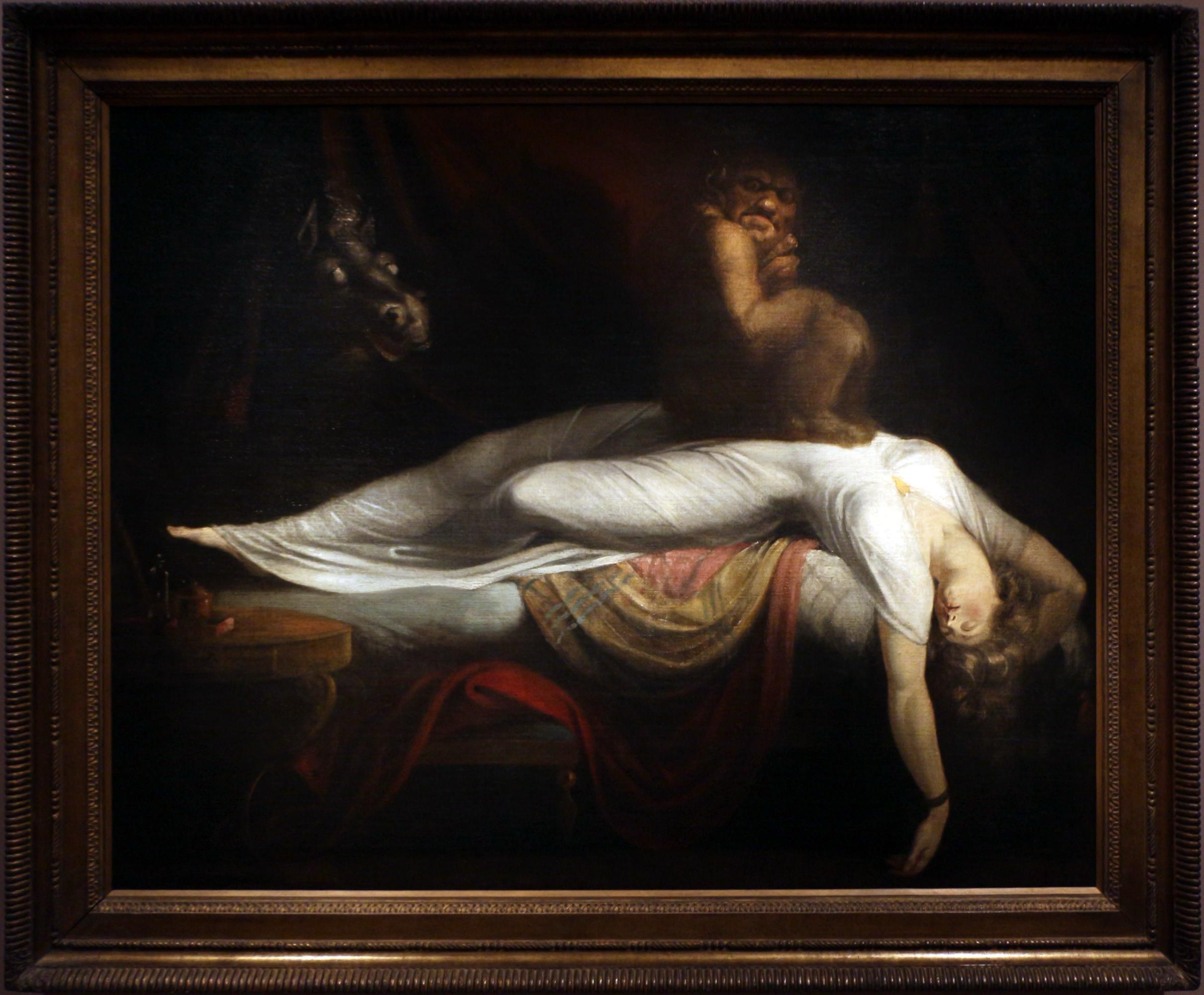
Henry Fuseli, The Nightmare, 1781. A haunting depiction of the unconscious overwhelming the conscious self, evoking Jung’s concept of the Shadow and the forces within us that we struggle to recognize or control.
We are often times at the mercy of our inclinations. In moments of adversity it is often the case that we subconsciouly become possessed by them. We can't even distinguish ourselves from that which has taken control. When I become possessed I feel myself under a sort of blanket which is warm and comfortable, but at the same time I am restless unable to be at peace. Do you ever find yourself not wanting to be angry, or anxious? Despite our best efforts it is hard to escape. Pyschologist Carl Jung, gives a system to understand what comes over us by introducing the concept of the archetypes.
The archetypes are universal patterns which are inhereted by every man, and which predispose us to specific behaviors. You have probably seen them in movies and in real life. The Wise old man, the loser, the athlete, the hero, and the knight are just a few. I remember that while in highschool I anxiously sought out to fit in a social group. The jocks, the nerds, the geeks, the class clowns, these were the very limited groups which I instinctively sought to fit into. Although ultimately I never truly captured one. I always felt that if I identified myself as one thing, I deny other parts of myself. Hence Jung warns that total possession of one archetype, no matter how noble you think it is, is dangerous. Jung explains it explicitly.
"Possesion by an archetype turns a man into a flat collective figure, a mask behind which he can no longer develop as a human being, but becomes increasingly stunted "(The Relations Between the Ego and the Unconscious, CW 7, §390).
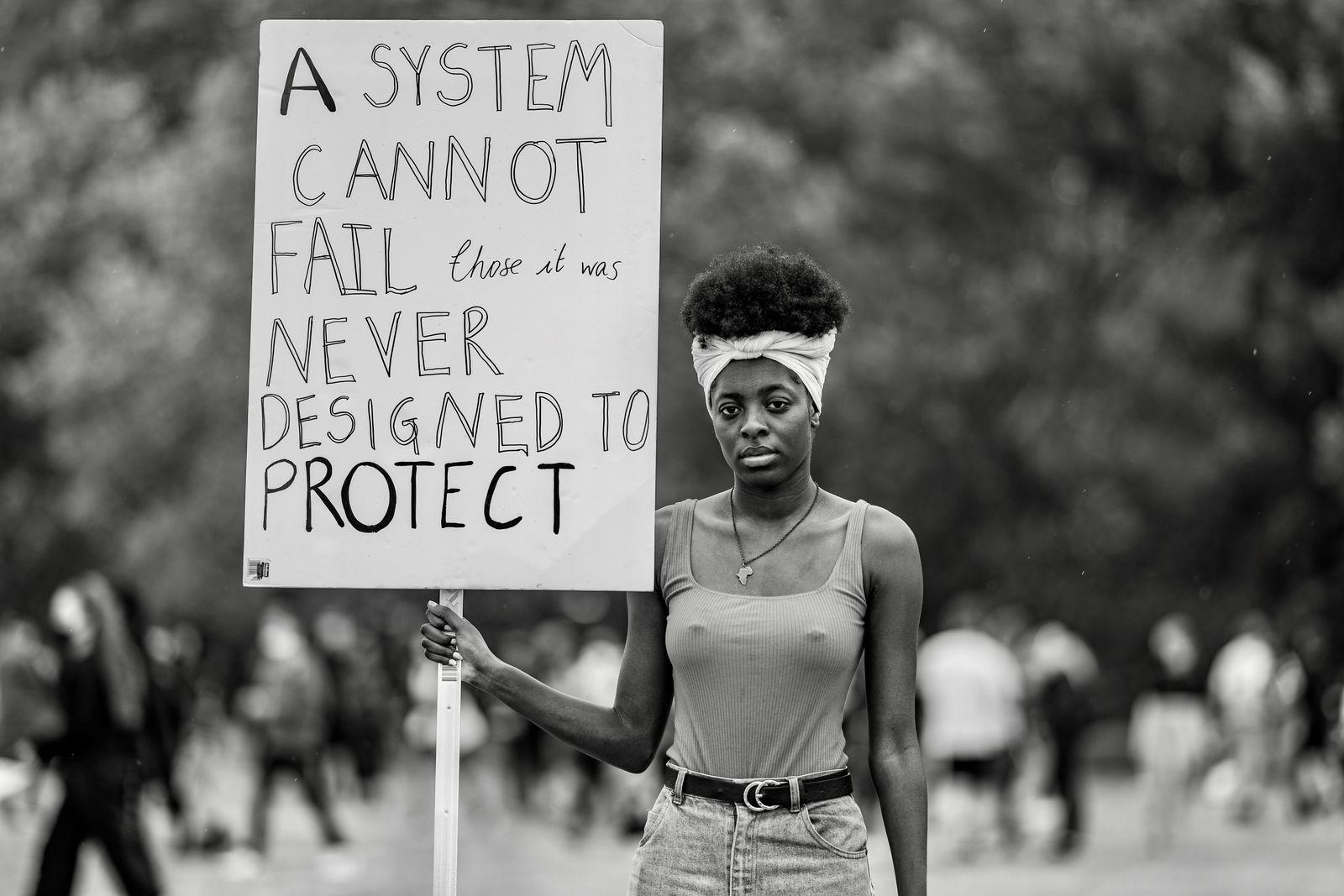
Vanessa Charlot, Racism is Terrorism, St. Louis, Missouri, 2020. An unidentified woman stands alone holding a sign protesting police brutality and racism.

Steve Carmody, I Miss the America I Grew Up In, Saginaw, Michigan, 2020. A pair of demonstrators hold a sign expressing nostalgia for a perceived America of the past.
For example, in the 21st century the archetype of the victim is widespread. The victim demands justice and violence. And there is so much anger in politics, in the news, and distrust among people. This archetype becomes an isolating and draining waste of energy. Your perception becomes "me vs the world". As a result you start making decisions based with a clouded perception. You live your life in one dimension, under one idenity.
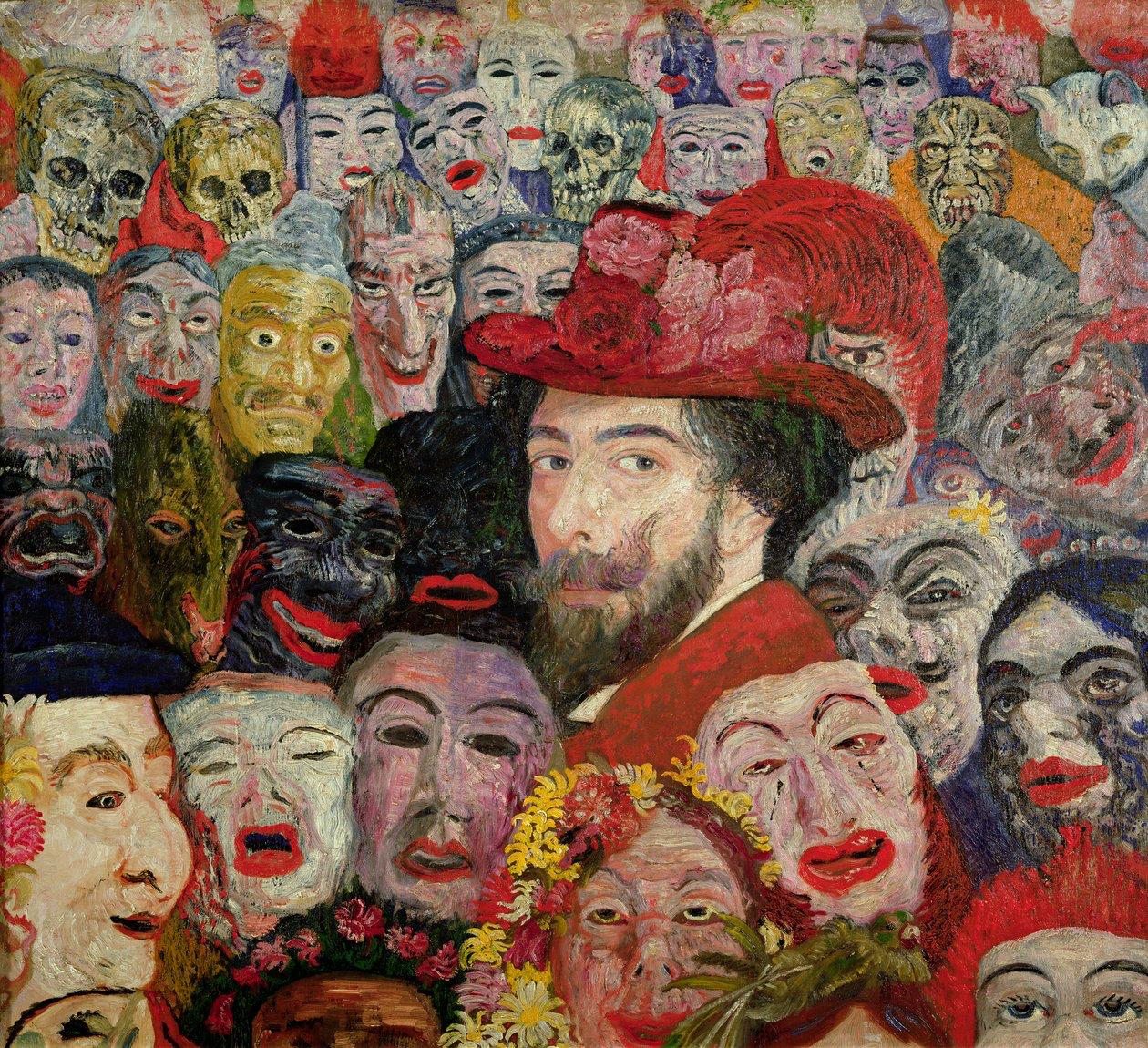
James Ensor, Self-Portrait with Masks (1899). A meditation on identity, persona, and the masks through which the individual can become lost among the roles imposed upon him.
This is just one example of how indiviuals in hard times lose thier heads and come out worse for it. Todays political climate is an appropriate example, as people associate thier identity with one thing. You continue forward, but are you really? To come out unscathed requires what Jung calls integration; it is the act by which we are free to no longer react to a possive force. This is truly a difficult feat for anybody. And maybe even impossible for many. To distinguish ourselves from our emotions and our perception is the same as asking us to stop being. To take our away some right of ours. It invokes more anger and fury. It is the same as asking us to change ... to die in a certain sense. But in reality it is to take our masks off.
The image of integration is Christ himself. He represents the archetype of wholeness. The opposite of the way we live our lives, mostly in a loop of cognitive dissonance, totally divided interiorly and exteriorly from others. Christ is the embodiment of the archetypal self. He transcends our fractured nature and reconciles it with our personal darkness. He tells us that we are not simply what we think of ourselves, but much more. He reconciles our fractured idenities. And goes beyond the message of simply being "a good person". He is the escape latch from identities which keep us stagnant in life.
Suffering can keep us trapped in the darkness it invokes in ourselves. However, suffering can be transformative. St. Paul writes,
"Suffering produces endurance, and endurance produces character, and character produces hope, and hope does not dissapoint us..." (Romans 5:3-5).
In practical terms suffering is meant to form us. However, if you are still skeptical, you must be aware that you run the risk of losing yourself to darker inclinations. We by nature are inclined to it. There is a whole academic literature about it. Experience tells us this. What I found to be necessary in times when my faith and hope were dwindling is to remain actively silent and endure. Silence can act as a deterent from accepting those little voices in your head as your own. Silence also brings on alot more peace. Another image is Christ sleeping through the storm. Freaking out like his disciples runs the risk of sinking the ship.
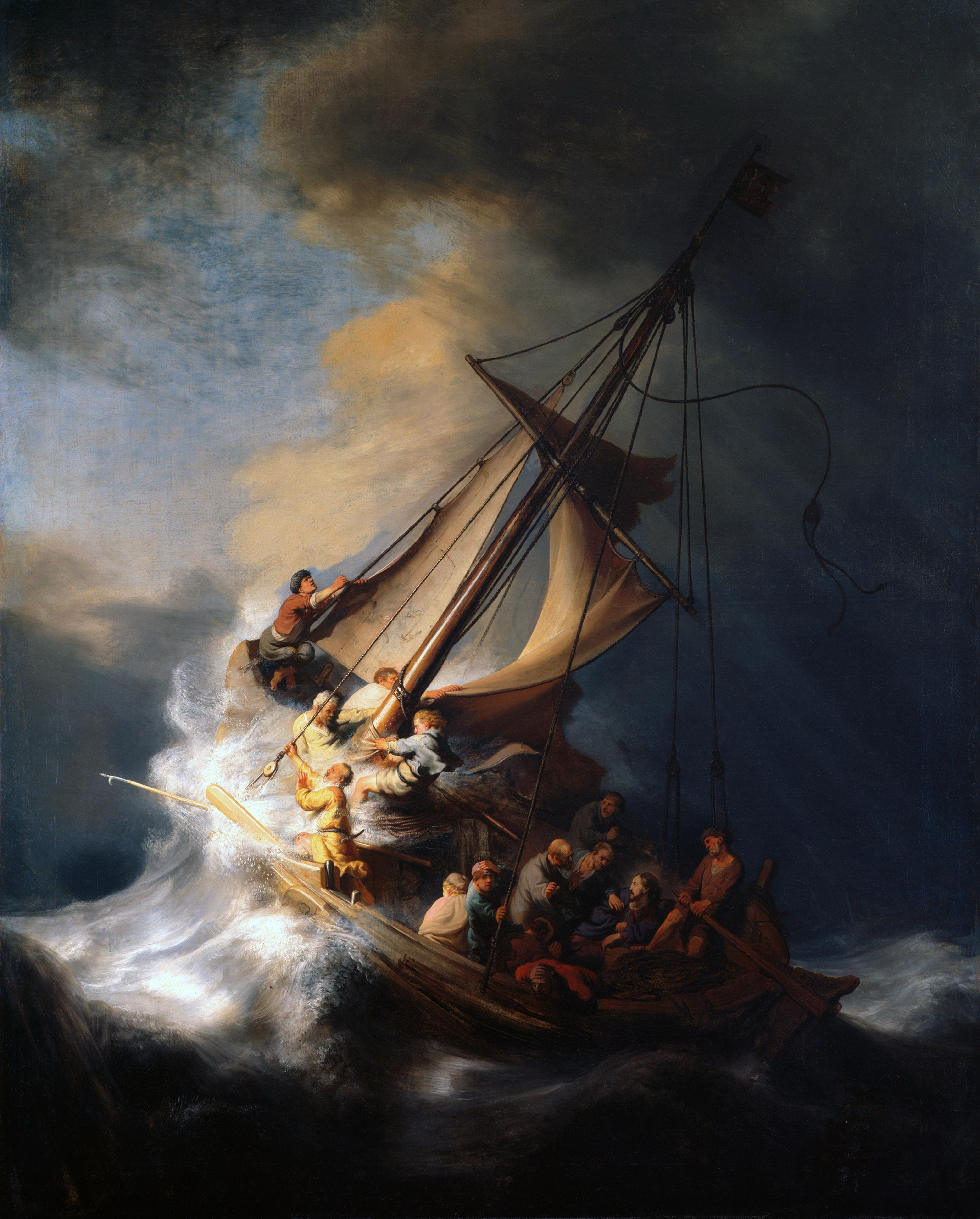
Rembrandt van Rijn, Christ in the Storm on the Sea of Galilee (1633). Christ remains at rest amid the chaos surrounding him—a visual image of enduring suffering without becoming consumed by it.